We are committed to being environmentally friendly, so we provide you with easy and free ways to dispose of your end-of-life electrical equipment / batteries.
The consumer plays a crucial role in the system of disposal of electrical appliances and portable batteries. It is the consumer who decides what to do with the old appliance/battery. Old and unwanted electrical appliances and batteries do not belong in unsorted municipal waste, but should be handed over to collection points, so-called take-back points, from which they are sent for reuse or recycling.
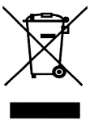
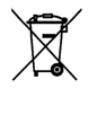
The consumer must be informed by the symbols below that the electrical equipment/batteries concerned do not belong in municipal waste. All new electrical equipment/batteries are so marked. The symbol may be indicated directly on the equipment, on its packaging or in the instructions for use or warranty card.
Not only electrical equipment, but also batteries contain many recyclable metals such as zinc, iron, manganese, nickel, cadmium and lead. Some of these substances are also very dangerous for the environment and human health, especially mercury, lead and cadmium. Selected batteries are often marked with the symbol of the chemical element they contain (Pb, Cd, Hg).
By taking batteries and electrical equipment to a take-back point, we save primary raw material resources, especially by recycling the material, and at the same time protect our environment from possible improper disposal.
Unused batteries that are not handed over for recycling through take-back points, but are stored, for example, in office drawers or elsewhere in households or companies, can cause fires. Lithium batteries in particular have this property. With regard to safety, it is therefore very important to recycle used batteries as soon as possible.
Alkaline batteries (commonly designated as Alkaline or AlMn) are available in standard sizes AAA, AA, C, D, 6V, and 9V. They are widely used in everyday household devices such as flashlights, calculators, toys, watches, smoke alarms, and remote controls.
Button cell batteries come in various sizes and encompass several chemical compositions (Alkaline, Lithium, mercury, silver, and Zinc Air). They are typically utilized in small electronics, including watches, hearing aids, toys, greeting cards, and remote controls.
Zinc-carbon batteries are often labeled as Classic, Heavy Duty, or Power Cell. They come in AAA,
Commonly designated as Lithium, Lithium-Ion, or Li-Ion, these batteries are produced in various sizes. They primarily power modern portable electronics, such as laptops, cell phones, digital cameras, and MP3 players.
Ni-Cd batteries are available in various sizes and are commonly found in cameras, hand tools, cordless phones, and radios.
Similar to Ni-Cd batteries, NiMH batteries come in various sizes and serve similar applications, pro podobné typy zařízení – zejména v kamerách, ručním nářadí, bezdrátových telefonech a vysílačkách.
Lead-acid batteries, frequently designated as SLA or gel, are available in voltage options of 2V, 6V, and 12V. They are suitable for higher-power or backup applications, including uninterruptible power supplies (UPS), wheelchairs, off-road vehicles, and water scooters (jetskis).
Mercury batteries come in various sizes and are designated as Mercury, Hg, or HgO. Their applications include watches, hearing aids, toys, greeting cards, and remote controls.
Designated as Silver or AgO, these batteries are available in various sizes and are mainly used in small precision devices such as watches, hearing aids, toys, greeting cards, and remote controls.